How can you tell your scissor lift needs repair before it quits on a job? Most breakdowns don’t happen without warning. The machine usually tells you something is wrong weeks or even months before it fails completely. The problem is that operators and owners often ignore these early signs because the lift is still technically working. Then one day it’s not.
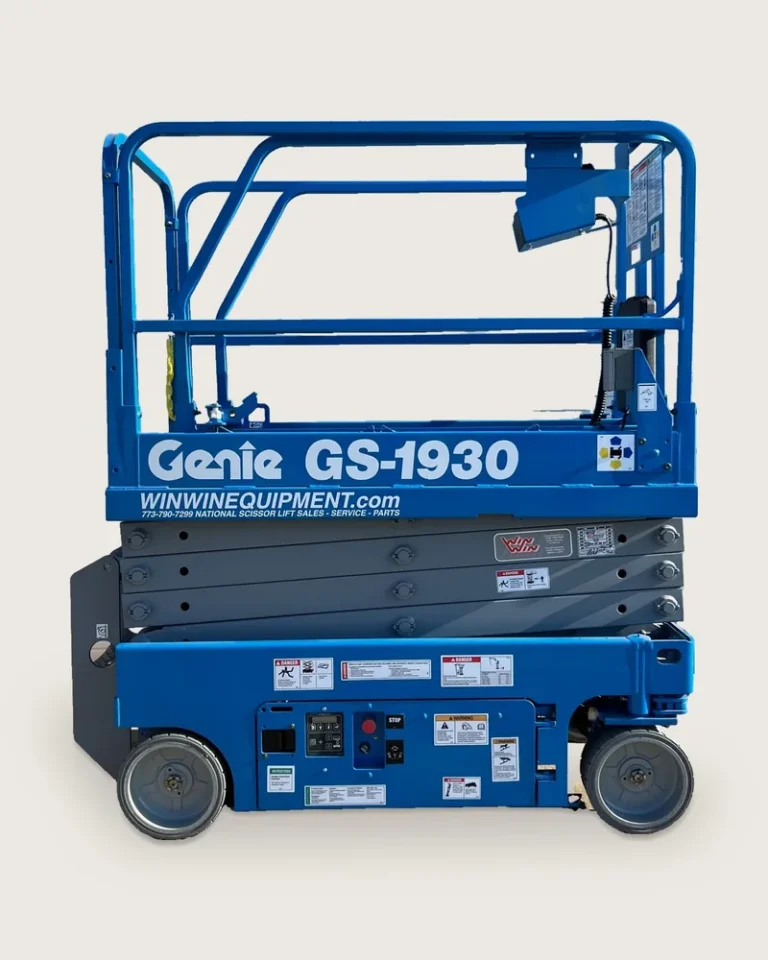
Here are five warning signs we see constantly at our Addison, IL repair shop. If your lift is showing any of these symptoms, it’s time to get it looked at before a small problem becomes a big bill.
1. The Platform Is Lifting Slower Than Usual
If your lift is taking noticeably longer to reach full height, something is wrong. The most common causes are low hydraulic fluid, a worn hydraulic pump, or a failing valve. In cold weather, slow lift speed can sometimes be attributed to thickened hydraulic fluid, but if it’s happening consistently — especially in moderate temperatures — it’s a sign of a developing hydraulic issue.
Catching this early often means a relatively inexpensive fluid top-off or valve adjustment. Ignoring it can lead to pump failure, which is a much more expensive repair.
2. You See Hydraulic Fluid on the Ground
Any visible hydraulic leak is a problem that needs attention. Even a slow drip means a seal, hose, or fitting is failing. Hydraulic fluid on the ground also creates a slip hazard on your job site and can lead to OSHA scrutiny.
Small leaks are usually quick, affordable fixes — often just a hose or seal replacement. But hydraulic systems lose pressure as they leak, which means your lift is working harder than it should. Over time, this accelerates wear on the pump, cylinders, and valves.
3. Unusual Noises During Operation
Grinding, whining, clicking, or knocking sounds during lift operation are never normal. Grinding can indicate worn bearings or gears. Whining often points to hydraulic pump problems or air in the hydraulic lines. Clicking or knocking can signal loose bolts, worn pins, or structural issues in the scissor mechanism.
If your operators are telling you the lift “sounds different,” take that seriously. Noises are often the first warning sign of a mechanical failure that’s still weeks away — but coming.
4. The Platform Drifts or Won’t Hold Position
If the platform slowly sinks when elevated, or if it drifts to one side during operation, you have a hydraulic or structural problem. Platform drift usually means a failing hydraulic valve or an internal cylinder seal that’s no longer holding pressure.
This is also a safety issue. A platform that won’t hold position puts your operators at risk. If you’re seeing drift, stop using the lift and get it inspected immediately.
5. Error Codes or Warning Lights on the Control Panel
Modern scissor lifts have onboard diagnostics that display error codes when something is wrong. If your control panel is showing codes or warning lights, don’t just reset them and keep working. Those codes exist for a reason — they’re telling you a specific system needs attention.
Common error codes relate to battery voltage, tilt sensor calibration, hydraulic pressure, and motor controller faults. Our technicians can diagnose any error code on Genie, JLG, and Skyjack equipment and tell you exactly what it means and what it’ll cost to fix.
Scissor Lift Needs Repair? Don’t Wait for the Breakdown
Every one of these issues is cheaper to fix early than late. A $200 hydraulic hose replacement today prevents a $2,000 pump failure next month. A $150 diagnostic call now saves you a full day of lost productivity when the lift finally stops working entirely.
If your scissor lift is showing any of these signs, call Win Win Equipment at (773) 790-7299 or submit a service request online. We pick up and deliver throughout the Chicago area, Schaumburg, and the surrounding suburbs. Over 30 years of experience. 1,000+ lifts serviced. Honest pricing, always.
Seeing one of these signs? Don’t wait for the failure. Win Win’s service shop picks up across Chicagoland, diagnoses same-day, and quotes before any work starts — 773-790-7299.
Manufacturer specs and support: Genie, Skyjack and JLG.
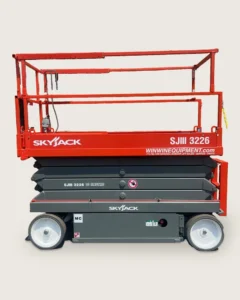
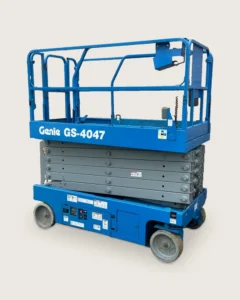
Scissor lift repair FAQ
Is it safe to keep using a lift that shows one of these signs?
Treat a hydraulic leak, platform drift, or any tilt or overload alarm as a stop-work item: tag the machine out and have it checked. Slow lifting or a noisy pump is usually safe to finish the shift on, but book the repair before it gets worse.
How much does a typical repair cost?
It depends on the cause. Batteries run roughly $300–$800 for a set, hydraulic leaks $200–$500, and cylinder work $500–$2,000. Our scissor lift repair cost guide breaks it down by job.
Can you come to my site?
Yes. We do on-site service across Chicagoland, or you can bring the lift to our Addison, IL shop. Most common repairs on Genie and Skyjack slab scissors are finished the same day once parts are in hand.
Should I repair it or replace it?
If the repair is more than about half of what a refurbished replacement costs, or the machine needs several major components at once, replacing usually makes more sense. We will tell you honestly which side of that line your lift is on.